

By Kapil Sibal
(Based on a media interaction; published with permission)
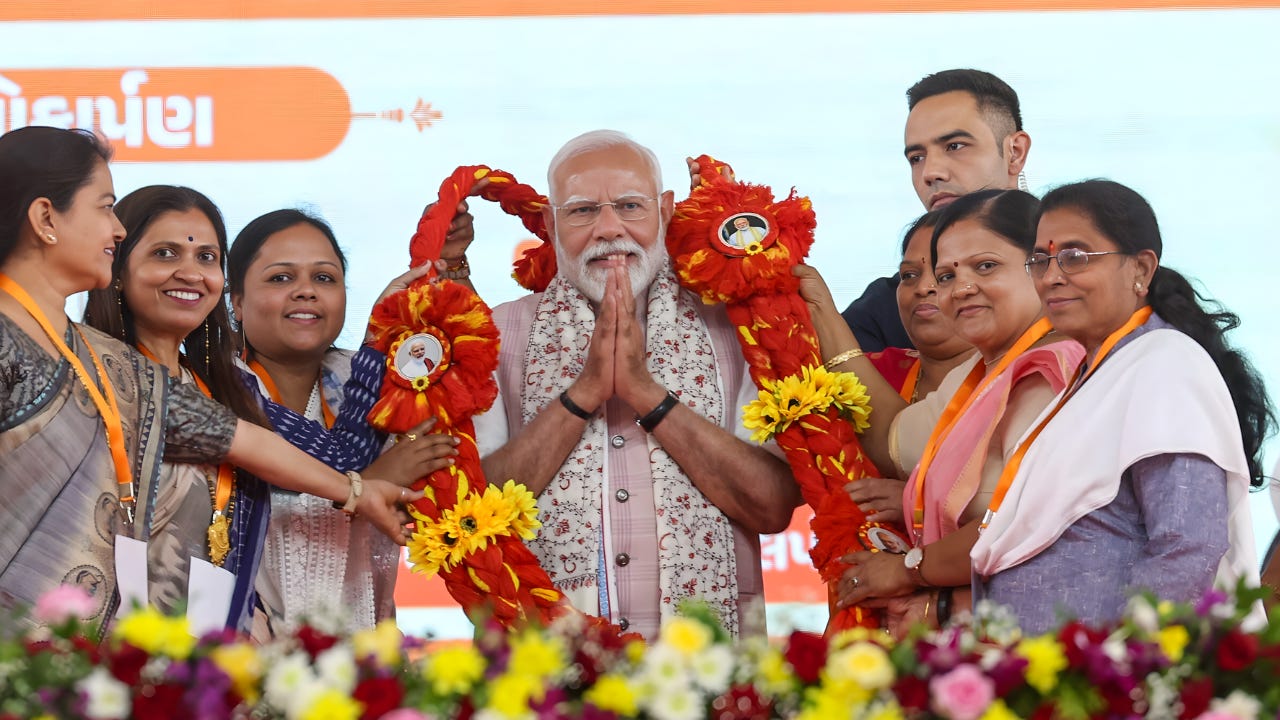
The Modi government has convened a special three-day session of Parliament from April 16–18, 2026. The stated objective is to amend the Nari Shakti Vandan Adhiniyam (The 106th Constitutional Amendment Act) to fast-track the 33% reservation for women in the Lok Sabha by 2029.
However, a closer look at the timing and the legal fine print suggests that this move has less to do with gender justice and more to do with a strategic “delimitation” designed to secure a lopsided political advantage for the BJP.
The first red flag is the schedule. The session is being held while West Bengal is in the middle of crucial assembly elections, with polling phases on April 23 and 29. By calling this session now, the government is forcing opposition MPs—particularly from the TMC—to choose between representing their constituents in Parliament or campaigning in their home state.
This isn’t just a logistical hurdle; it is a calculated attempt to disrupt the opposition’s momentum. If the government truly cared about the sanctity of the process, this exercise could easily have waited until after April 29.
When the Women’s Reservation Bill was passed in 2023, the law (under the newly inserted Article 334A) explicitly stated that reservation would only come into effect after two things happened:
A new Census was conducted (post-2026).
A Delimitation (redrawing of constituency boundaries) was carried out based on that Census.
Now, the government is pivoting. They are reportedly seeking to bypass the wait for a new Census and use the 2011 Census data instead. Why the rush? The Registrar General has already indicated that a fresh Census could be completed by December 2027. By using 15-year-old data to redraw the map of India today, the government is signaling a desire to manipulate constituency boundaries to suit their 2029 electoral map.
Article 334A also says that delimitation can be carried out only for the purpose of implementing women’s reservation—that is, only to decide which seats will be reserved for women. However, the proposed amendment seeks to implement it through a “general delimitation” based on the old Census while also increasing the number of seats.
This means that the government is using women’s empowerment as a shield for political engineering. We have already seen in Jammu and Kashmir and in Assam how delimitation was used for political purposes. No opposition can accept this.
The most dangerous aspect of this plan is that it would damage India’s federal structure. Delimitation carried out solely on the basis of population would completely upset the political balance between North and South India.
Consider the math: Uttar Pradesh currently has 80 Lok Sabha seats and Tamil Nadu has 39—a difference of 41. If delimitation is carried out as per the 2011 Census and the total number of seats is increased to the proposed maximum of 850, UP’s tally would jump to 140, while Tamil Nadu’s would only reach 51. The gap would widen from 41 to 89 seats.
This essentially punishes Southern states for their success in population control and economic development. In a country as diverse as India, representation cannot be a numbers game that erases the voice of entire regions.
If the Prime Minister is genuinely concerned about the delay in women’s representation, the solution is simple: Grant 33% reservation within the existing 543 seats of the Lok Sabha today. All opposition parties would support such a move.
The fact that the government refuses to do this—and instead insists on a complex exercise—proves that the “Nari Shakti” narrative is merely a cover for a “Rajneetik” (Political) power grab. No member of the opposition should accept this assault on our federal structure. We must demand reservation without the strings of a biased delimitation attached.
Subscribe to get updates, bookmark, or comment.