

By Sanjay Dubey
Take a look around global politics today and an obvious disconnect jumps out: the median age of world leaders is 63, while that of the global population is around 30. There are exceptions, of course — like Nepal’s 36-year-old Prime Minister Balen Shah, the 38-year-old leaders of Iceland, Burkina Faso and Ecuador, and Volodymyr Zelenskyy, who became Ukraine’s president at the age of 41. But the broader trend is clear: political power remains heavily concentrated among older people.
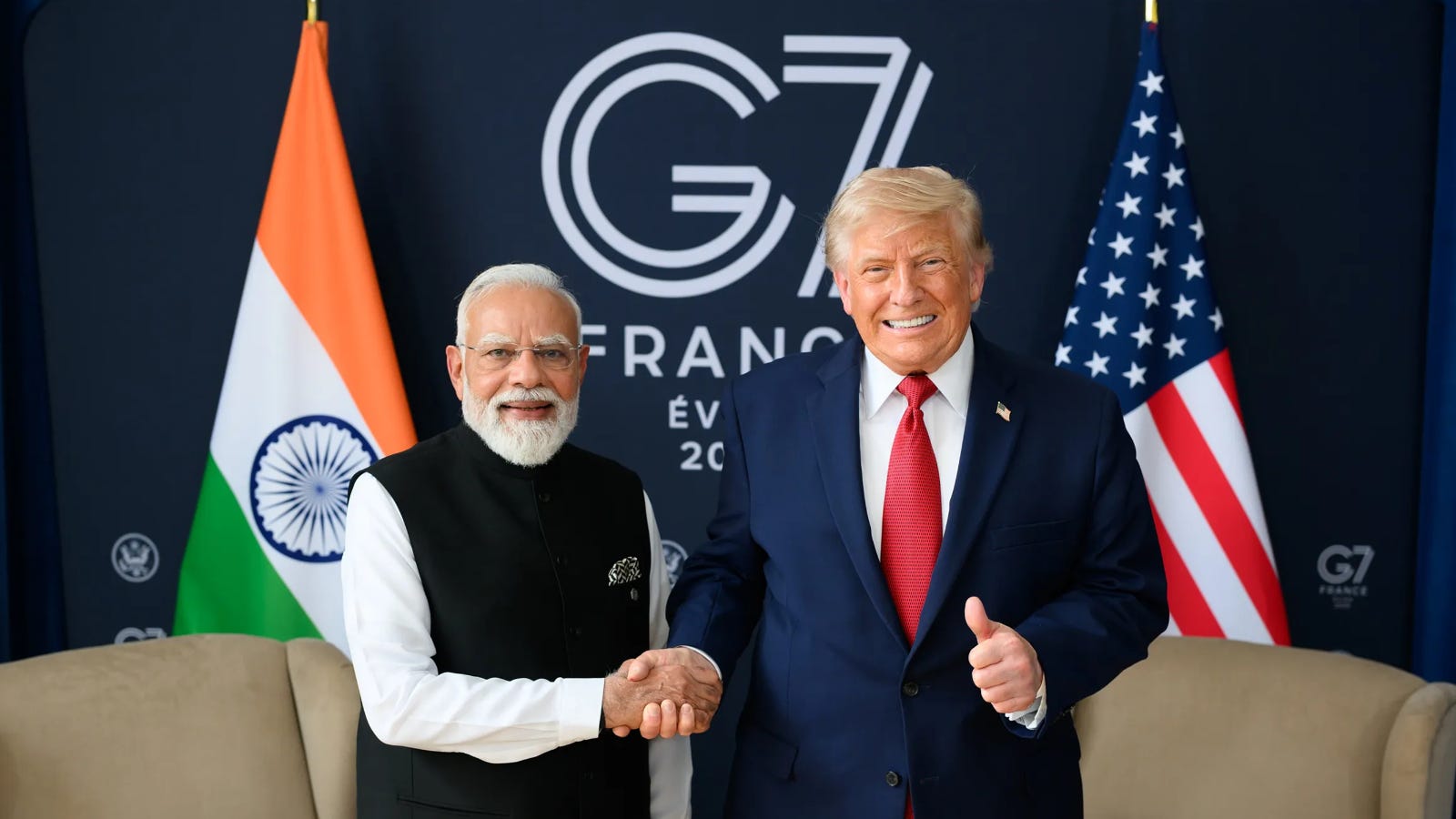
At the extreme end sit rulers governing populations a fraction of their age, like Cameroon’s Paul Biya at 93 or Saudi Arabia’s King Salman at 90. Yet this isn’t just an authoritarian habit. Major democracies show the exact same pattern. Donald Trump governs in his 80s, and India’s Prime Minister Narendra Modi serves in his late 70s.
In most fields, people in their 80s and 90s are rare exceptions at the top. Politics is different. National leadership has no mandatory retirement age, and some of the world’s most powerful political offices are still occupied by people well into their 80s and 90s.
It isn’t because voters dislike young candidates. As Aksel Sundström, political scientist at the University of Gothenburg and co-author of Youth Without Representation, pointed out in a recent TV discussion: “It's very expensive to run as a candidate for politics. So it's not really that voters do not want young leaders, but it is something in the systems that makes it inherently difficult to become elected.”
According to Aksel, long tenures are frequently equated with competence and sitting political elites vehemently guard their positions, refusing to allow internal competition from capable young leaders.
Western European democracies—such as Sweden, Finland and Denmark—have party systems that keep campaign costs low and encourage competition, yielding far greater age diversity. In most of the rest, even measures such as age limits or age quotas often function as strategic tools rather than genuine efforts to bring young leaders into the decision-making core.
A prime example is India. After coming to power in 2014, the BJP under Prime Minister Narendra Modi established an unwritten norm retiring leaders above the age of 75 from executive roles. This effectively phased out veteran stalwarts like L.K. Advani and Murli Manohar Joshi. However, Narendra Modi is in his late 70s yet still controls the party and government.
“In many African countries there are age quotas [reserving seats in parliament and candidate lists for young leaders], and generally the research shows that they too function more like a strategy for the elite to keep their power and to get in some young people, but not too many,” Aksel explains further.
To understand this issue better, Aksel Sundström conducted research with fellow political scientists Charles T. McClean and Daniel Stockemer. Focused on the United States and the United Kingdom, the research set out to test whether this massive age gap impacts people’s faith in governments and the decisions they make. The findings, published in their 2026 study Youth Representation and Democratic Legitimacy, were eye-opening.
The research showed that legislative bodies with a balanced mix of younger members (under 40) alongside senior politicians commanded significantly more public trust. Perceptions of procedural fairness shot up by 21 percentage points in the US and a staggering 47 percentage points in the UK compared to bodies made up entirely of older politicians. Overall confidence that the government would make good decisions on future issues also jumped by 10 to 22 percentage points.
Unsurprisingly, these gains were strongest among young adults aged 18 to 34. When asked why youth inclusion mattered so much, over 50 percent of respondents explained that younger leaders simply understand the lived realities of modern life such as navigating tough job markets, rising education costs, and the digital economy.
A sizeable share of respondents also pointed out that younger leaders are far more attuned to long-term challenges like climate change, technology, and future planning. Broader political research cited in the trio’s work also shows that as politicians grow older, they use less future-oriented language in their speeches and legislative work. Aging political bodies and leaders often focus on short-term political survival and immediate benefits, kicking long-term issues down the road.
To illustrate this contrast, Aksel points to municipal governance in Japan, where younger mayors allocate significantly more public funds toward childcare, early childhood education, and family support.
If we talk about India, the country has a median age of just 28, yet its Parliament remains overwhelmingly senior. If Narendra Modi wins office in 2029 at age 78, he will become the second-oldest person to take the oath of Prime Minister in Indian history, after Morarji Desai (who took office at 81).
When young citizens feel shut out of formal political institutions, their faith in democratic processes breaks down. This leaves Gen Z either indifferent or increasingly pushed toward seeking accountability and power through street-level resistance.
That makes bringing young people into decision-making bodies a necessity, not charity. However, as Aksel points out: “For the past 10 or 20 years, parliaments are not really becoming younger. If anything, they are becoming slightly older.”
Why, then, does almost nobody talk about age the way they discuss gender or ethnic representation in political decision-making?
“I believe that the idea is that everyone gets older, so in some sense this fairness will over time become adjusted. But the point is, if we never have presence of the young generations, those views will never be represented,” says Aksel.
Subscribe to get updates, bookmark, or comment.