

By Sanjay Dubey
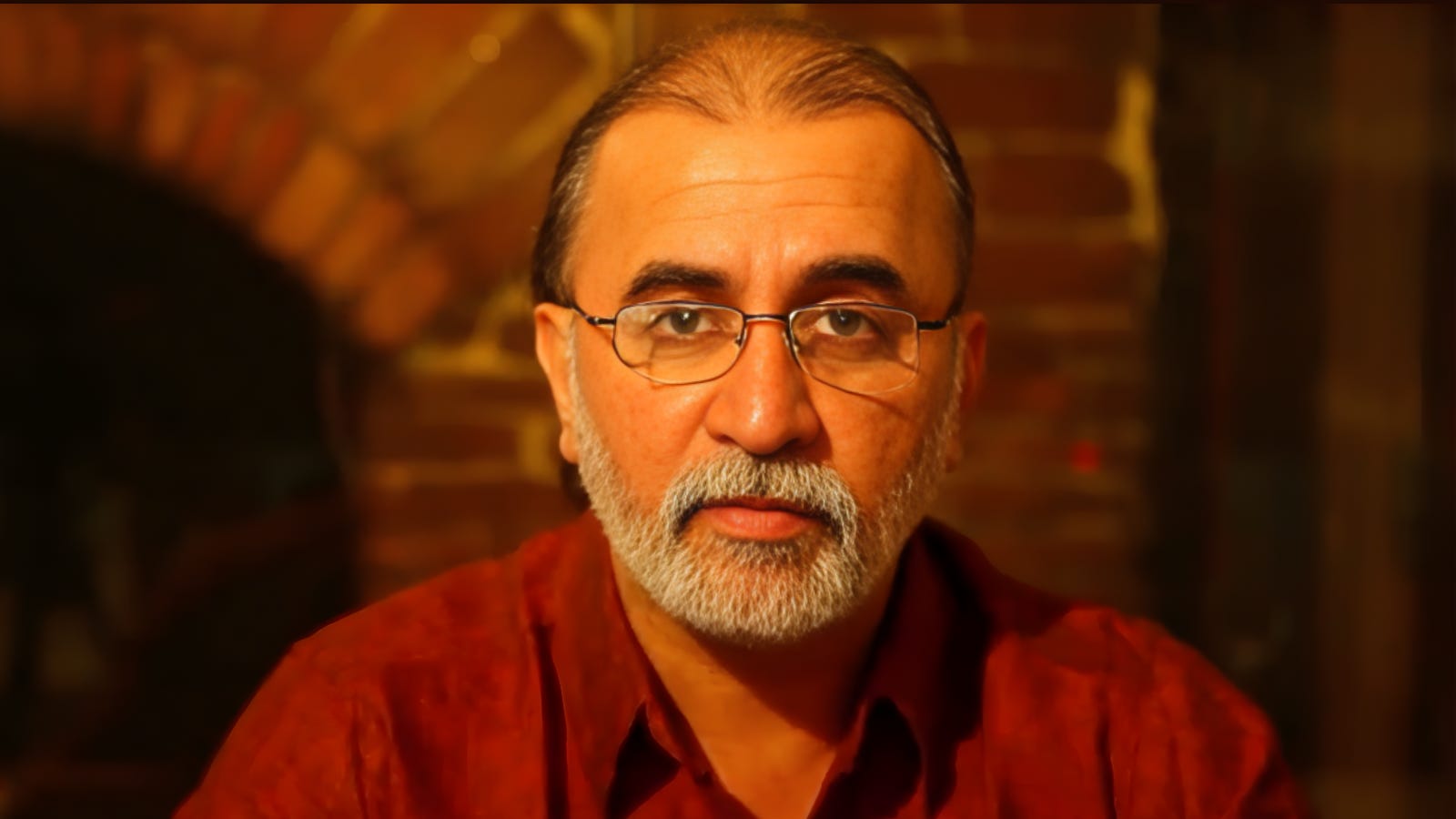
In 2013, Tehelka magazine's founder and then editor, Tarun Tejpal, was accused of sexual assault by a colleague. A trial court in Goa acquitted him of all charges in 2021. The Goa government appealed the verdict in the High Court, where the matter is currently being heard. India's Solicitor General, Tushar Mehta, is representing the state in these hearings. Satyagrah originally published this detailed analysis of the trial court's judgment in 2021. For readers looking to understand the verdict, the debates surrounding it, and the case in its entirety, this analysis remains just as relevant today.
On page 509 of its judgment, the Goa district court, while acquitting Tehelka founder Tarun Tejpal, noted:
“The IO didn’t supply a copy of unedited CCTV footage of Block 7 to the accused (Tarun Tejpal) due to which the accused had to move to the honourable Supreme Court. The honourable court had directed the prosecution to provide clone copies of the unedited CCTV footage to the accused, which was not done for two years and a clone copy of the CCTV footage was finally handed over to the accused in 2016.”
Two important points emerge from this observation of the court. First, it would not have been easy for Tarun Tejpal to defend himself in court. Second, what actually was in the CCTV footage that required the accused to go all the way to the Supreme Court just to get a copy? Add to this the fact that despite the Supreme Court’s directive, the accused didn’t receive a clone copy of the footage for two full years, and the matter becomes even more intriguing.
It is no secret that in our country, the victim of a sexual assault case often undergoes extreme hardships. This has less to do with the laws themselves and more to do with the attitude of law enforcement agencies and the overall response of society in such cases. The Tejpal case, however, was different in this regard: the establishment stood firmly with the complainant. The fact that the Goa police acted on its own and registered a suo motu FIR against Tejpal gives an indication of that backing.
Then there was former Goa Chief Minister Manohar Parrikar, who also exhibited keen interest in the case and held several press conferences with the media.
Furthermore, in her testimony before the district court, noted in the verdict, the Investigating Officer (IO) in charge of this case, Sunita Sawant, “admitted that deputy SP Sammy Tavares, SP O.R. Kudtarkar, and DIGP O.P. Mishra were directing and supervising the investigation” (Page 395).
Sawant has the reputation of a tough police officer, which is probably why the Goa police handed over the investigation to her despite her being the formal complainant in the case. This occurred even though there was another female officer, Sudiksha Nayak, in the Goa police’s crime branch department who could have been entrusted with the investigation (Pages 506–507).
The Goa political establishment did not lose interest in the case seven and a half years later. Despite a change of guard, Chief Minister Pramod Sawant announced that the State would appeal the verdict in the High Court barely hours after the lower court acquitted Tejpal. A day after a copy of the judgment was released, the Goa government filed a plea in the High Court, and they were represented by the country’s second-highest law officer, Solicitor General Tushar Mehta.
As a side note that illuminates the unlikely nature of events in this case: in 2014, while Tejpal was in judicial custody, another case was suddenly registered against him, alleging he was forging a plan to escape from jail. Tejpal’s family alleges that this case was filed purely in an attempt to deny him bail. The accusation gains some ground given that seven years down the line, no one seems to have the faintest idea about what happened to that case.
The crucial evidence
A reading of the verdict makes it clear that whatever the CCTV footage contained played a crucial role in Tejpal’s acquittal. The victim had alleged that Tejpal tried to outrage her modesty at Goa’s Grand Hyatt on two consecutive nights, November 7 and 8, 2013, during Tehelka’s annual Think festival.
The victim’s assigned duties were to chaperone Hollywood actor Robert De Niro and his daughter Drena during their time at the event. The victim alleged that on the night of November 7, a day prior to the start of the festival, Tejpal accompanied her to see the De Niros off to their rooms after dinner. De Niro’s room was on the second floor of the two-storied Block 7 of the Grand Hyatt hotel.
The victim, in her statement, stated that they were on their way back after seeing De Niro off at his suite, but as she tried to exit the lift on the ground floor, Tejpal grabbed her and pulled her back into the lift. “Let us go wake up Bob,” the victim quoted Tejpal as saying. Once inside the lift, Tejpal sexually assaulted her. He kept pressing random buttons on the control panel to keep the lift in motion, preventing it from stopping or opening its doors on any floor.
In her allegations, the victim went on to state that when the lift finally came to a halt on the ground floor after two minutes and the doors opened, she immediately dashed out of the lift blinking back tears, deeply distressed, and left immediately for the Goa International Centre (GIC) where the Tehelka staff were staying. Upon reaching GIC, she confided in three of her colleagues and told them what had occurred at the Grand Hyatt, according to her statement.
It is important to note that while the Grand Hyatt did not have CCTV cameras inside its lifts, there were cameras in the lobbies right outside them on every floor. This footage, therefore, held the answers to several vital questions: Did Tejpal actually grab the victim and pull her into the lift? What was their body language when they stepped out? And did the lift door remain closed continuously for two minutes, as the victim alleged?
This last question was crucial. In his defense, Tejpal maintained that they had accidentally stepped out of the lift on the first floor instead of the second because the floors looked identical. If true, they were not inside the lift continuously for two minutes, but for barely half a minute split across two separate intervals.
In other words, the utmost importance of the footage of Block 7 of the Grand Hyatt stands established beyond question. If Tejpal had committed the crime, the footage would have nailed him; if he was innocent, the footage was equally necessary for him to prove his case.
Yet, the Goa police—the formal complainant in the case—seized the footage only from the ground and second floors, leaving out the first floor. The court observed that despite being of crucial importance, the footage from the first floor was either destroyed or not submitted to the court (Pages 421, 507). The court also noted that since Tejpal in his defense had mentioned exiting the lift on the first floor, the first-floor footage would have been vital to prove his narrative false if it was untrue.
What makes things notable is that the investigating officer, Sunita Sawant, along with multiple other police officials, actually confessed in their testimony to having watched the first-floor footage in November 2013 (Page 419). Curiously, every one of the officials who acknowledged viewing the first-floor footage claimed that they could not remember what was on it.
When it became clear that the first-floor footage had existed and had been viewed by the police, the lawyer for the prosecution argued that it was possible the footage had been destroyed in the property room of the court due to improper storage. The court, rejecting this argument of the prosecution, noted in its judgment that if that were the case, all the footage would have been destroyed, not exclusively the footage of the first floor, and specifically only for a few select days from August 20, 2013, onwards (Pages 433, 435).
The court observed that while the IO directed her officers to seize the DVR for the ground and second floors, she did not ask them to seize the first-floor footage. The court further observed that the police failed to seal the DVR room of Block 7 at the Grand Hyatt, failed to seize the footage in time, and failed to generate the crucial hash value for the footage, which ensures that digital evidence cannot be tampered with (Pages 423, 507, 509). Moreover, information regarding the confiscation of the DVR was omitted from both the charge sheet and the case diary. The investigating officer told the court she had no idea how that omission happened.
On the other hand, Tarun Tejpal issued a press release on November 22, 2013, demanding that the related CCTV footage be made public. This was never done, and only selective footage was made available to him and the court.
Moreover, the court observed in its judgment that the prosecution objected to the request of the defendant to cross-examine the Investigating Officer while playing the DVR containing the footage by stating that “the DVR is not functional.” When a further request was made by the accused to either get the DVR repaired or obtain a compatible DVR from the Grand Hyatt, the public prosecution opposed this suggestion as well (Page 433).
Claims and the visual evidence
Let us examine the footage that was actually produced before the court.
The first revelation: the footage from November 7 shows that Tejpal did not pull the victim back into the lift on the ground floor after seeing off Robert De Niro, as had been alleged.
A brief but relevant digression: the victim told the court that Tejpal had insisted on accompanying her to see De Niro to his suite given it was the first day of the event. This detail was not part of her initial statement. This claim was introduced by the prosecution to show that Tejpal was using De Niro as an excuse, and that his real motive was to accompany the victim. However, Prosecution Witness 43 (PW43), Prawal Srivastava, testified that he was standing with the accused when the victim came up to them and asked Tejpal to accompany her (Pages 249, 251).
Baseline logic also suggests that if Tejpal had intended to assault the victim and was using De Niro as an excuse to accompany her, he would most likely have done so while coming down from the second floor after leaving De Niro in his suite, rather than reaching the ground floor and then pulling her back inside.
As it turns out, Tejpal did not pull the victim back into the lift as they exited. Instead, footage shows that they both exited the building entirely and spent almost six minutes in conversation outside the block before they went back inside Block 7 and re-entered the lift. While the victim omitted this segment entirely from her complaint and several subsequent statements, she finally accepted in court that they had been in conversation outside before re-entering the block. This indicates that the return to the block and the act of getting into the lift again might have been triggered by what they were discussing during those six minutes (Pages 249, 263).
To return to the allegations and the CCTV footage: in multiple statements to the police as well as before the court, the victim repeatedly emphasized that Tejpal was pressing random buttons on the lift’s panel to make the elevator stay in circuit, preventing it from stopping anywhere and keeping the doors from opening.
However, two prosecution witnesses—a representative of the elevator company, Ameen Jabbar, and Grand Hyatt security officer Priyan K.S.—testified in court that keeping the lift moving up and down in that manner without the doors opening is technically impossible (Page 385). The court also made an observation in its judgment that the investigating officer did not bother to check whether the lift could be made to go up and down without its doors opening, neither before registering the FIR nor after the case was lodged (Page 520).
This claim was the foundation of the victim’s allegation of assault—that the lift doors were prevented from opening, that she was trapped by Tejpal inside it, and that she had no way of getting out.
When it was established that this was not possible, the police paid additional visits to the Grand Hyatt Hotel in November 2020, seven years after the incident. Almost immediately following this, the victim in December 2020 amended her statement in court (Pages 512, 518).
She then claimed that Tejpal pressed only one button to keep the lift moving and the doors closed, rather than multiple buttons. She also changed her claim that the lift had been in constant motion, stating instead that she did not know whether the lift was moving or stationary. However, she remained firm on one thing: the doors did not open anywhere for two minutes.
During cross-examination of the technical witnesses, it was established that the doors of the lift could not be kept closed even by pressing the emergency button inside the lift (Page 396). Close observation of the footage of the ground floor and second floor during the two minutes of the alleged incident also shows that the lift doors opened at least twice on the ground floor alone. Because the footage of the first floor was not available, it was not possible to determine how many times the lift doors opened on the first floor, the court noted in its judgment (Page 389).
This leaves only two interpretations: either the victim and the accused were inside the lift when the doors opened during those two minutes, or they were not inside the lift at all.
This is where the court examined Tejpal’s version of what occurred. It was his account that the victim and he had exited the lift on the first floor instead of the second by mistake and walked to the corner room they thought was the De Niro suite, only to realize upon arrival that they were on the wrong floor. Tejpal’s version of events matched the two minutes in question. If they did exit the lift on the first floor, walk to the corner, recognize their error, walk back to the lift, and go up to the second floor, the sequence would take around two minutes (Page 443).
The CCTV footage went on to show more. The victim had said that when the lift finally opened on the ground floor, she dashed out of the lift (changing the floor from the ground to the second floor in her subsequent statements) while Tejpal followed her and kept asking, “What happened?” She also stated that she was visibly upset and blinking back tears at that point.
The CCTV footage, however, shows a different narrative. The footage of the second floor shows Tejpal was the first one to leave the lift, not the victim. She follows Tejpal out and they take the stairs to the ground floor. While first-floor footage of this time is unavailable, the ground floor footage half a minute later shows Tejpal walking slightly ahead while the two of them come down the stairs and walk out, talking, as they exit Block 7’s lobby.
Contemporaneous witness
The contradictions become more pronounced when viewed against the allegations of November 8, the day the victim said Tejpal tried to assault her again. Before that, there was another significant omission from the victim’s narrative of November 7.
The victim, in her statement, maintained that her friends and co-workers at Tehelka—Ishaan Tankha, Shougat Dasgupta, and G. Vishnu—were the first ones she confided in soon after she reached the Goa International Centre. Following this, on November 15, she wrote an email to these friends and attached a document with a detailed chronological account of the alleged incident. Because Tankha was unable to open the attachment, she sent him a fresh email the next day, November 16. This email was also sent to the victim’s stepmother and served as the draft of the letter emailed to Tehelka managing editor Shoma Chaudhury on November 18 as her official complaint. All of these emails were important evidence, but the police selectively seized only a few of them (Pages 282, 286).
It is an email which she wrote to her co-workers on November 15, 2013, that holds evidence of a crucial omission. In her email, the victim mentioned spotting a friend, Nikhil Agrawal (Defense Witness 4, or DW4), standing at the entrance to the lawn near Block 7 when she exited the block with Tejpal on November 7. According to her email, she immediately asked her friend DW4 to stand there and talk to her until Tarun Tejpal left from there. She stated in her email that she did not inform him about what had happened to her moments prior (Page 258).
This means that by her own account, DW4 was the first person she encountered, meeting him barely a minute or two after the alleged incident. Yet, the victim removed all mention of him after that initial email—from her subsequent complaints and every statement she made in court.
In cross-examination, confronted with this draft and the reference to the first person she met, the victim admitted that she had deleted DW4 from her account, stating she did so for personal reasons. She declined, however, to clarify those reasons (Pages 258–260).
In law, the first person a complainant meets after an alleged offense is highly relevant to the case, particularly if met immediately after the incident. Such a person is considered a “contemporaneous witness.” Yet, as the verdict notes, this fact was not disclosed to the court by the prosecution, and the victim removed references pertaining to Nikhil.
The court also noted that the IO, despite seizing documents that referenced this witness by name and knowing he was the only contemporaneous witness in the case, neither tried to contact or question him, nor did she ask the victim why she had deleted references to him in her official complaint.
The omission did not end there. The friend in question reached out to the police via a letter, asserting that there were facts he wanted to add to the case. Despite receiving this letter, the Investigating Officer failed to question him. Confronted with this, she maintained that she did not question the witness on the directions of her superiors in the police department (Page 271). Later, he was called as a witness by the defense.
The court observed that the testimony of this friend of the victim, DW4, stood in contrast to the victim’s claims. DW4 recalled meeting the victim on November 7 while standing in the garden with his fiancée.
“I saw them coming from the poolside towards the garden. Tejpal moved towards the bar while she came towards me,” DW4 told the court. “She was excited and had a smile on her face.”
DW4 testified that the victim motioned for him to come near and told him that she had been flirting with Tejpal. She was smiling and did not look perturbed, DW4 testified (Pages 260, 262). Interestingly, the next day, the victim exchanged multiple messages with DW4. Two of the messages from her to him read: “But thank God I met you,” and “Obviously, you won’t tell anyone about this.”
The court also noted that the victim gave conflicting accounts regarding her relationship with DW4. She claimed he was only an acquaintance and not a close friend; however, the verdict notes that a total of 53,176 messages were exchanged between them on WhatsApp on the phone seized by the police. When DW4 was asked about their friendship, he affirmed their extreme closeness. Despite meeting him within seconds of the incident and sharing a close friendship, the victim did not mention the incident to him. Conversely, she had never communicated with Shougat Dasgupta on WhatsApp, had fewer than 10 messages exchanged with Ishaan Tankha, and under 500 with G. Vishnu, yet she chose to return to her hotel and talk to these three colleagues two hours later in her room (Pages 134, 253).
November 8
Returning to November 8, the second of the two alleged incidents, the victim recalled in her complaint to Tehelka and statement to the police that Tejpal had asked her to accompany him to Robert De Niro’s room. 'We need to get something from there,' she quoted him as saying when she ran into him on the ground floor of Block 7. Concerned about being asked to go to an empty room with him, she insisted on retrieving the item herself. At that point, according to her statement, Tejpal grabbed her hand and dragged her into the lift, where she was again sexually assaulted. (Page 191).
She further alleged that when they reached the second floor, he said to her, “the universe was telling us something,” to which she replied that she was going down by the stairs and not the lift. Tejpal, however, did not let her and, “sensing her hysteria,” pulled her back into the lift. “He was comfortable manhandling me by now,” she wrote in her complaint.
Here is what the CCTV footage for this sequence of events shows:
On the ground floor, at 08:10 pm, Tejpal is walking toward the lift while the victim walks behind him. Near the lift, Tejpal runs into renowned photographer Rohit Chawla. Tejpal and Chawla speak briefly, and Tejpal gestures to Chawla that he would “call him” before walking into the waiting lift, followed by the victim, who waited for him to finish his conversation. Contrary to the claim of being grabbed by the wrist and pulled in, Tejpal does not make physical contact with her here (Page 444).
Twenty seconds later, the footage from the second-floor camera shows the lift opening. The victim comes out followed by Tejpal, but barely two steps out, Tejpal turns around and re-enters the lift. At this point, the victim, who has gone a few steps ahead, realizes he has gone back into the lift and turns to run back into the lift after him.
This is the moment which her narrative describes as him manhandling her and preventing her from leaving the lift. The footage shows no physical contact initiated by him to pull her back (Page 445).
The contradiction between the visual record and the victim’s account on both days led the verdict to note:
“What the victim has claimed and what the screens show are completely opposite of each other and still the Investigating Officer didn’t even question the victim on the same.” (Page 520).
The contradictions, the concealment of facts, the omission of key witnesses, and the shifts in narrative led the court to conclude that the victim could not be considered a witness of “sterling quality” on whose sole deposition a conviction could safely rest (Page 229).
The court also noted the absence of medical evidence in the case. When the victim was asked about this in court, she maintained that the police never asked her to undergo a medical examination, otherwise she would have done so. The documentary record, however, shows that she declined the medical examination on paper (Page 47).
This case presents multiple dimensions for examination. We can focus primarily on two. First, the role of the police in this case. While the lacunae in the investigation have been outlined above, they represent only a portion of the issues highlighted. The verdict lists innumerable counts of institutional failure in this investigation.
The second aspect relates to the discussion surrounding the judge’s assessment of the victim’s behavior, which generated significant public debate. A look at the judgment alongside the complaint and the statements of the victim places this in context. While public commentary suggested the judge criticized the victim for not behaving like a victim, the judge’s observations seems to have directed at the contrast between the complainant’s statements regarding her feelings and actions versus the actual behavior recorded on camera, in photographs, and as described by witnesses.
The victim’s narrative spoke of being terrified, avoiding Mr. Tejpal, and being scared to remain in the hotel for fear of encountering him again (Page 468). However, multiple photographs over the course of the three-day event show her posing for pictures with the accused, Robert De Niro, and others, appearing at ease. Witnesses recalled hearing her call out to Mr. Tejpal to join a photograph she was taking with Robert De Niro on November 10, 2013. One of the prosecution witnesses even noted that she looked happier than both Mr. De Niro and Mr. Tejpal in that photograph. After the alleged incidents, she also sent messages to the accused informing him of her location without being prompted to do so (Page 489).
The court also examined WhatsApp and CCTV evidence showing that the victim returned to Robert De Niro’s room late at night on two occasions and detailed playfully her encounters to her friends on WhatsApp—including Tarun Tejpal’s daughter—in a tone that the court found inconsistent with the narrative of being fearful and deeply traumatized by an assault a few hours prior. In fact, on the night of November 9, she chose not to return to her own hotel but instead obtained a key to a production room from a staff member and stayed back at the Grand Hyatt itself (Page 469).
The victim told the court that as she was about to leave for the airport after the Think festival concluded, she realized her mother was staying in her flat in Mumbai and three of her mother’s associates were also coming to stay. Additionally, she wanted to process the distress caused by the incident, so she decided to extend her stay in Goa for a few days. However, the court observed, citing evidence, that the victim had planned to stay in Goa with her friends before and after the Think festival well in advance, and the incidents of November 7 and 8 did not alter her or her mother’s travel plans. She arrived in Mumbai a day after her mother had already left the city (Pages 491, 500).
It was the combination of these contradictions, the omissions, and the conflicting material evidence that led the court to find the victim’s testimony insufficient to serve as the sole basis for a conviction. Ultimately, Tejpal was acquitted based on the CCTV footage and the technical implausibility of the lift operating in the manner alleged by the prosecution.
Regarding the role of the police, the court commented at length. The court noted its disappointment that the IO did not reconcile the claims made by the complainant with the CCTV footage of the hotel on November 26, at the time of recording her statement, even though the IO had already watched the footage. The IO did not ask the victim how she determined she was in the lift for exactly two minutes on November 7. The police did not inquire about the specific buttons pressed to stop the doors from opening, nor did they secure the emails sent to co-workers on November 15, which constituted her first detailed account of the incident.
Furthermore, none of the emails produced by the police in court were downloaded directly from Tehelka’s server. The police did not record statements from Nikhil Agrawal, Tia Tejpal, or Kartikeya from the production team who assisted the victim in staying at the Grand Hyatt on the night of November 8–9. The police did not question the complainant about Nikhil and did not produce the technical manual of the Mitsubishi lift in court.
Apology emails
Finally, regarding the two emails Tarun Tejpal wrote to the Tehelka staff and the victim on November 20, 2013:
The first of these was an “official” apology written to the Tehelka staff, which evidence shows was drafted by managing editor Shoma Chaudhury after the victim demanded an apology for the “closure” of the complaint. The judge notes that multiple Supreme Court judgments make clear that “confessions” demanded under threat or under the inducement of closure of a complaint, or demands for confessions that require an accused to “self-incriminate” are inadmissible in a court of law.
The judge also noted that the second email, titled “Personal” by Tejpal, did not contain an admission of the specific acts alleged by the victim. The judge referenced Supreme Court precedents stating that a statement cannot be read selectively to omit parts that contradict or deny the central allegation.
“If the mail titled ‘personal’ is looked at in the light of the Supreme court decision, there is absolutely no admission of confession of any incriminating fact even remotely suggesting sexual assault by the accused,” the court maintained (Page 300).
And at the end, a small, seemingly insignificant detail but one that was responsible for a lot of public rage against Tejpal: the claims that Tejpal was a father figure to the victim, someone she knew and trusted since childhood, which is why her anguish and devastation was bigger, and why Tejpal’s crime was even more heinous.
But an email by the victim on Tarun Tejpal’s 50th birthday (in March 2013, the same year when the alleged incident took place) shows that this was not true. In this mail, she wrote that when she met Tarun Tejpal for the first time, she was already working for Tehelka (page 110).
(With inputs from Vikas Bahuguna)
Disclosure: Sanjay Dubey, the author of this analysis, served as Editor of Tehelka Hindi and attended the 2013 Think Fest in Goa. After the allegations surfaced, he actively encouraged independent writers to cover the controversy critically and wrote editorials that questioned his own organization’s handling of the crisis.
Subscribe to get updates, bookmark, or comment.