

By Sanjay Dubey
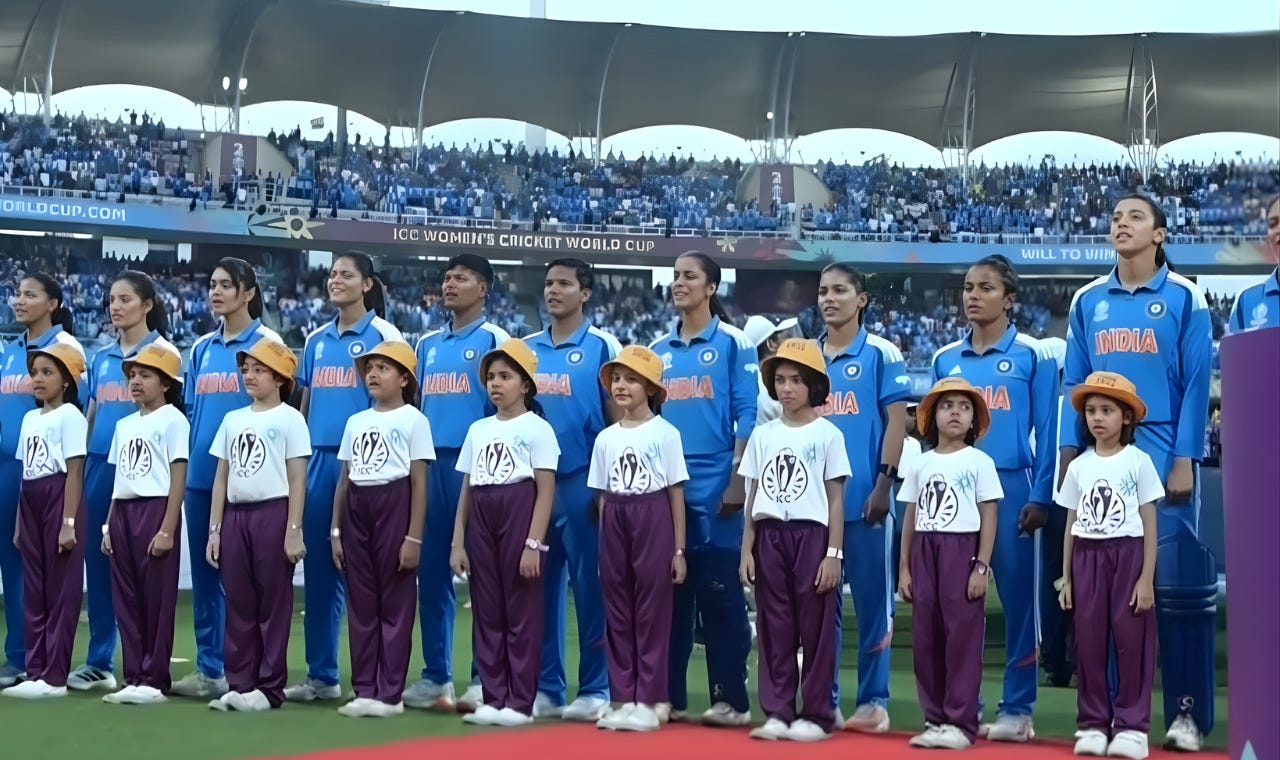
Bankim Chandra Chattopadhyay’s Vande Mataram was the emotional soul of India’s independence movement. It served as a powerful rallying cry against colonial rule and remains deeply etched in national memory. Yet, in January 1950, when the Constituent Assembly formally adopted the national anthem, it chose Rabindranath Tagore’s Jana Gana Mana, while granting Vande Mataram equal status as the national song.
But a national anthem has a different job from a song of resistance. It must turn emotion into a common voice of a nation, one that can be sung by crowds, played at ceremonies, and carried beyond the country's borders.
1. Built for everybody
Many national anthems are notoriously difficult for ordinary crowds to sing. The US anthem, The Star-Spangled Banner, demands a wide vocal range, with sudden leaps between high and low notes. As a result, it is often performed by solo singers or played from a recording rather than sung by the crowd. France’s La Marseillaise similarly demands dramatic, operatic power. Jana Gana Mana sits at the other end of the spectrum, alongside accessible anthems like Japan’s Kimigayo and Canada’s O Canada.
Widely believed to be based on Raga Alhaiya Bilawal—a simple morning raga—the melody moves gently note by note without sharp jumps. This steady structure lets thousands of untrained voices in school assemblies, stadiums, or parades sound dignified and unified. Vande Mataram, by comparison, has a more classical and intricate melody, with expressive bends and pauses. It can be beautiful when performed by a trained singer or choir, but those same features make it harder for an ordinary crowd to sing together in sync.
2. Short, complete, memorable
Public ceremonies require precise, manageable timing. At approximately 52 seconds, Jana Gana Mana provides a complete musical arc: a clear opening, a steady build, and a decisive finish (Jaya he, jaya he...). Tagore’s original Bengali composition, Bharoto Bhagyo Bidhata, contains five stanzas, but India adopted only the first stanza as the anthem. This single verse forms a self-contained, balanced unit. In contrast, The Star-Spangled Banner has four verses, but only the first is ever sung, leaving the rest of the official poem largely forgotten. The full version of Vande Mataram spans six stanzas and takes several minutes to sing, whereas adopting only the first two stanzas leaves the melody feeling open-ended rather than conclusively resolved.
3. Restraint over fervor
National anthems often reflect the passions of their era. La Marseillaise is a martial call to arms born out of violent revolution. The larger Vande Mataram poem draws much of its strength from intense devotional imagery, including the personification of the motherland as a divine goddess. While this provided immense emotional courage during the anti-colonial struggle, it presented theological and ideological challenges for a multi-faith, secular republic.
Jana Gana Mana chooses quiet restraint. It mentions no weapons, celebrates no battlefield victories, and avoids religious personification. By addressing the Bharata Bhagya Vidhata (the dispenser of India’s destiny) and focusing on moral unity, it creates a neutral civic space where citizens of every faith—Hindu, Muslim, Sikh, Christian, Buddhist, Jain, and Parsi—stand on equal footing.
4. Shared vocabulary
Tagore wrote the anthem in Sadhu Bhasha, a Sanskritised literary register of Bengali. Its vocabulary draws heavily on Sanskrit-derived words familiar across many Indian languages. Rather than relying on complex poetry or regional metaphors, the verse is essentially a rhythmic map of the country: Punjab, Sindhu, Gujarata, Maratha, Dravida, Utkala, Banga, Vindhya, Himachala, Yamuna, Ganga. This makes the anthem more accessible across linguistic regions. Vande Mataram, though deeply poetic, uses denser classical language that requires greater effort for many citizens to read and pronounce with ease.
5. Made to travel
A national anthem is not performed only by citizens singing together. It also has to work when played by military bands, orchestras, and ceremonial ensembles, often far from home.
Nehru’s 21 May 1948 note to the Cabinet made precisely this practical case for India’s national anthem:
“It is to be full of life as well as dignity and it should be capable of being effectively played by orchestras, big and small, and by military bands and pipes. It is to be played not only in India but abroad and should be such as is generally appreciated in both these places.”
By the standards Nehru laid out, Jana Gana Mana was the better choice. It was better suited to orchestras, military bands, and international ceremonial settings. Its steady, march-like character made it easier to adapt to these formats, while Vande Mataram’s more classically inflected melody was less straightforward to render in the same way.
Vande Mataram remains India’s beloved national song of emotional devotion and historical struggle. But Jana Gana Mana was chosen as the national anthem because it was built for the everyday life of a democracy: accessible to every voice, neutral across all faiths, and unified in rhythm.
Subscribe to get updates, bookmark, or comment.