

By Sanjay Dubey
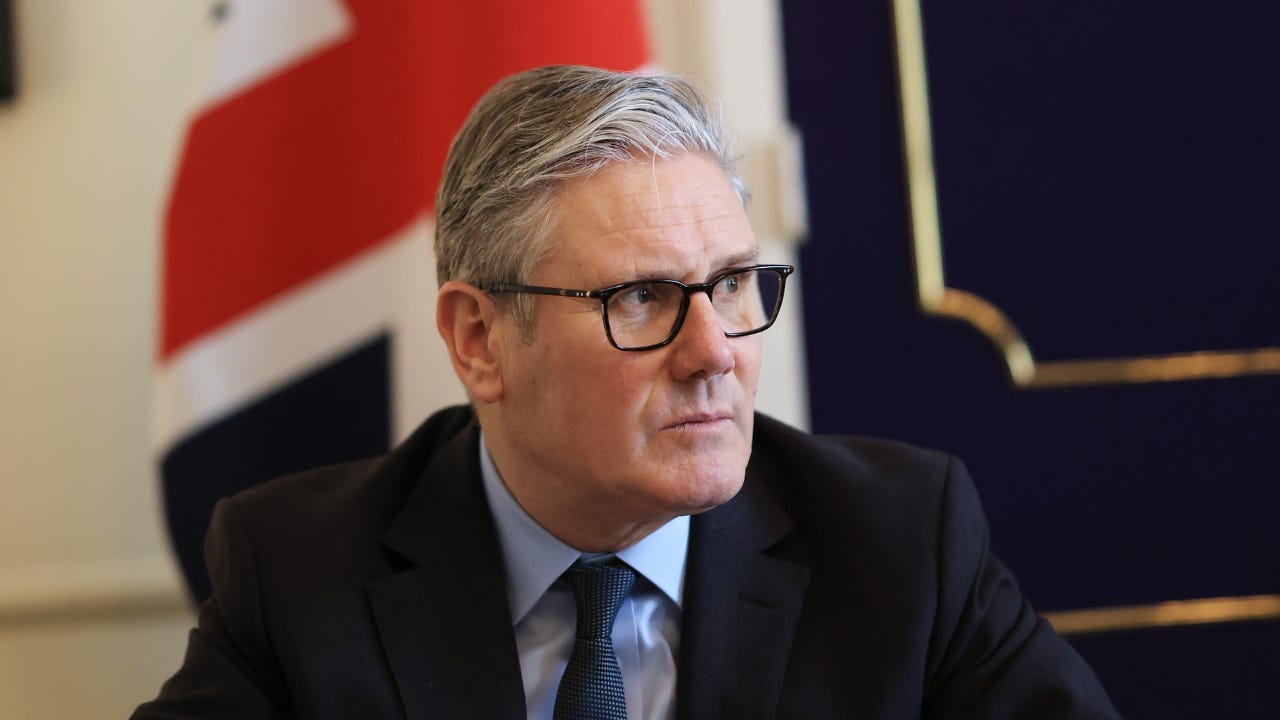
Yet another chapter has been added to the political turmoil gripping Britain over the past few years. Prime Minister Keir Starmer, who led the Labour Party to a historic victory just two years ago, has resigned from office. He is the sixth British prime minister in the past ten years to leave before completing a full term. The country is expected to have a new prime minister in the coming weeks or months. However, given the current political situation, Britain could even end up getting yet another prime minister before the next general election in 2029.
When Keir Starmer led the Labour Party to a massive victory in the 2024 general election, he was hailed as the party’s savior. Before this, Labour had last won a national election in 2005, and in 2019, it had suffered its worst defeat since 1935. But Starmer’s victory was not what it seemed on the surface. Political analysts described it as a “loveless landslide”—a victory devoid of genuine public affection or trust.
In that 2024 election, Labour won 411 out of 650 seats in the House of Commons—a commanding 63 percent. Yet, the party secured just 33 percent of the popular vote. In terms of absolute numbers, this vote count was actually lower than what Labour received during its historic defeat in 2019. Because of this, analysts argued that Starmer’s landslide was less a mandate for Labour and more a fierce public backlash against the incumbent Conservative (Tory) government. Voters wanted change at any cost; consequently, traditional Tory supporters either switched to parties like Reform UK or stayed home entirely. As a result, the Tories collapsed to just 23 percent of the vote and 121 seats, handing Keir Starmer an incredibly massive victory.
Looking back at Starmer’s two years in office, he tried to govern as a serious leader and deliver on several fronts. Under his watch, Britain introduced its largest defense budget increase since the Cold War. He sought to curb illegal immigration by sea, taking tough steps like shutting down asylum hotels. His government also rolled out policies to protect children from the dangers of social media. Internationally, he maintained a resolute stance on the Ukraine crisis and European security. Yet, despite all of this, he failed to project the image of a strong and visionary leader to the British public.
Keir Starmer’s defining weakness was his tendency to often backtrack on his own policies. Shortly after taking office, he made the deeply unpopular decision to cut winter fuel payments for the elderly. Following widespread backlash, he was forced to reverse the move. A series of such U-turns severely damaged his credibility, reinforcing a perception among both the public and his own party that he lacked the political courage to stand by his decisions.
Alongside policy hesitation, serious questions arose regarding his political judgment. The most glaring example was the case of Peter Mandelson. Starmer decided to appoint Mandelson as the UK’s ambassador to the United States, despite his well-documented ties to the disgraced American financier Jeffrey Epstein. To make matters worse, when it was revealed that Mandelson had actually failed the security clearance for the post, Starmer claimed he was completely unaware. This episode cast a long shadow over Starmer’s administrative competence and political acumen.
What little credibility remained was shattered by his relationship with US President Donald Trump. Initially, Starmer invested heavily in cultivating a rapport with Trump, succeeding to the point where some labeled him the “Trump Whisperer”—someone who knew the art of managing the American president. However, this alignment lasted only as long as Starmer agreed with Trump unconditionally. The moment differences emerged over Iran, Donald Trump began publicly mocking the British government and its military capabilities. He went so far as to deride the Royal Navy’s large warships as “toys” and remarked that Starmer was certainly no Winston Churchill.
This public humiliation was bound to alienate the British public, and the fallout inevitably manifested on the ground—especially for a prime minister whose mandate was born out of a “loveless” or “voteless” victory fueled mostly by anti-Conservative anger.
The breaking point came with the local elections in May 2026, where the Labour Party suffered a crushing defeat. The primary catalyst for this downfall was the hard-right leader Nigel Farage and his party, Reform UK. Farage successfully dented Labour’s traditional vote bank, triggering panic among Labour MPs. They realized that under Starmer’s lackluster leadership, winning the 2029 general election would be an impossible task for the party and themselves. This panic fueled an internal rebellion, coinciding with the rapid rise of Andy Burnham—the man now widely poised to become Britain’s next prime minister. The cumulative effect of these factors was that Labour MPs gave Starmer an ultimatum to lay out a timeline for his departure.
Just a day before Starmer could officially announce his resignation, Donald Trump pre-empted him by revealing the news on Truth Social. It echoed the public humiliation Trump used to inflict on Canada’s former Prime Minister Justin Trudeau before and around his exit. By doing so, Trump robbed Starmer of the opportunity to exit office with any semblance of dignity.
Keir Starmer is generally not perceived as a bad person or a thoroughly incompetent leader. However, he held the reins of power at a time when the country was grappling with a cascade of domestic and international crises triggered by Brexit, Covid-19, and the whims of Donald Trump. The extraordinary times demanded an extraordinary leader—a quality Starmer simply did not possess. He operated like a decent manager when the country was desperately searching for charismatic, visionary leadership. Ultimately, the combination of a fragile electoral mandate, chronic indecisiveness, and a perfect storm of adverse circumstances brought an abrupt end to his political journey.
Subscribe to get updates, bookmark, or comment.