

By Sanjay Dubey
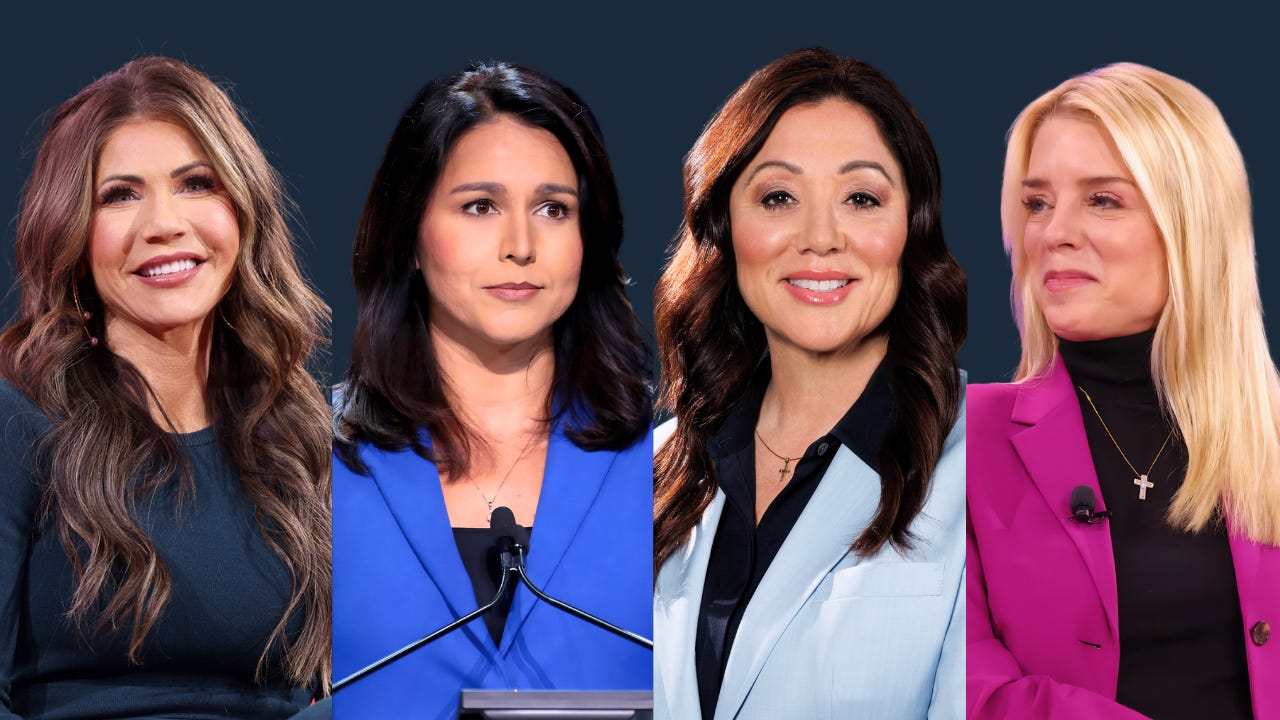
The recent resignation of Tulsi Gabbard from her post as the Director of National Intelligence (DNI) marks a telling pattern. She is the fourth cabinet-level official to leave the Trump administration within a span of just three months. High turnover is hardly a novelty under Donald Trump; during his first presidential term, nearly 90 percent of his top-tier officials were replaced or ousted.
However, the striking anomaly this time lies in the demographics of departure. All four cabinet officials who have left the administration so far are women—a figure that represents exactly half of the total female representation in the Trump cabinet. While it is true that most of these women were surrounded by controversies and allegations, the same can easily be said about several male cabinet officials who continue to remain securely anchored in their positions.
This raises a fundamental question: Can we view these high-profile exits merely as routine administrative shifts or personal decisions? Or is there a deeper, systemic gender bias at play? If so, it invites us to examine a larger global reality: when it comes to institutional gender parity, are governing structures from New Delhi to Washington equally flawed?
India
In 2023, India passed the historic Nari Shakti Vandan Adhiniyam (Women’s Reservation Act), aimed at securing a 33 percent quota for women in national parliament and state assemblies. The legislative triumph was widely celebrated, yet its actual implementation remains deferred to an uncertain future. The law was bound to two stringent preconditions: the reservation will only take effect after the next official census (scheduled post-2026) followed by a subsequent delimitation exercise to redraw constituency boundaries. Effectively, a structural right that could have been granted immediately was pushed into an indefinite timeline.
In stark contrast, Indian women secured grassroots reservation in local municipal and village bodies decades ago. India also historically made headlines by electing a woman Prime Minister, Indira Gandhi, less than twenty years after gaining independence. Yet, looking at the current federal structure, out of 30 cabinet ministers, only two are women—and one of them holds the traditionally gender-siloed Ministry of Women and Child Development. Furthermore, among the five Ministers of State with Independent Charge, there is not a single woman. Of the remaining 36 Ministers of State, only five are women, none of whom hold portfolios that could be classified as traditionally powerful or strategic.
Excluding Union Finance Minister Nirmala Sitharaman, no female leader in the central cabinet wields the kind of institutional authority enjoyed by her male counterparts. Even in her case, political analysts frequently argue that the most critical financial decisions are steered directly by the Prime Minister’s Office (PMO) rather than the ministry itself.
While Sitharaman also holds the distinction of having served as the nation’s Defence Minister, no other woman has ever headed the ministry responsible for the country’s borders. Similarly, internal security—the Ministry of Home Affairs—has never been entrusted to a woman, except when Indira Gandhi held it as an additional portfolio. When the late Sushma Swaraj was appointed as the first full-time female External Affairs Minister, it was an open secret that her administrative footprint resembled that of a junior minister. Major diplomatic breakthroughs were largely handled by Prime Minister Narendra Modi during his extensive foreign travels, with the PMO managing the rest.
The United States
Across the ocean, the United States routinely lectures the world on democracy and institutional equality. At the dawn of the second Trump administration, it briefly appeared that women were being handed the reins of some of the most formidable sectors of governance. However, by May 2026, that illusion completely shattered.
Tulsi Gabbard’s resignation as DNI is merely the latest link in a fast-developing chain. Before her, Attorney General Pam Bondi was removed from her post, Homeland Security Secretary Kristi Noem was dismissed, and Labor Secretary Lori Chavez-DeRemer was shown the exit. In every single instance, the vacancies left by these women were promptly filled by men. Conversely, not a single male cabinet-level minister has been removed from his position, despite navigating massive public controversies. The male officials who were displaced were either peripheral advisors or lower-level staff.
Consider the interesting case of Mike Waltz, who was initially appointed as Trump’s National Security Advisor (NSA). After becoming embroiled in a major controversy, he was removed from the NSA post but reassigned as the US Ambassador to the United Nations—a position that carries cabinet-level rank, unlike his previous assignment. In essence, instead of being penalized for a misstep, he was handed a promotion. No such institutional safety net or soft landing was extended to any female cabinet official.
This phenomenon perfectly illustrates the sociological concept of the “glass cliff.” The term describes a systemic tendency where women are elevated to high-ranking leadership positions during periods of intense crisis or severe institutional challenge. Because the situation is inherently precarious, the likelihood of complications is high, and when things go wrong, these women are readily turned into convenient scapegoats. Meanwhile, their male peers routinely weather heavy scandals without losing their positions.
Following Gabbard’s exit, her position is set to be filled by Aaron Lucas. This leaves women occupying just four out of the 26 cabinet-level positions in the US administration—a mere 15 percent. A closer look at these remaining portfolios reveals an even darker reality. Except for White House Chief of Staff Susie Wiles, whose role remains central to any administration, the remaining female cabinet members manage severely diminished domains. Linda McMahon heads an Education Department that the administration actively intends to dismantle, while Brooke Rollins leads an Agriculture Department facing deep proposed budget cuts. Kelly Loeffler runs the Small Business Administration, a relatively minor agency.
In corporate and political management, this strategy is known as “managing decline.” Portfolios requiring growth, resources, and expansion are systematically handed to men, while ministries designated for unpopular, slash-and-burn administrative cuts are relegated to women.
Republicans vs. Democrats
When comparing America’s two primary political factions, a stark contrast appears on the surface. The Democratic Party projects itself as a champion of diversity and gender equity. Joe Biden’s administration achieved a historic record by filling nearly 48 percent of cabinet positions with women, alongside electing the country’s first female Vice President, Kamala Harris. In contrast, the right-wing Republican Party has historically leaned toward a traditional, male-dominated socio-political framework.
Yet, a deeper examination suggests that this divide may only be cosmetic. While the Democrats readily appoint female ministers to cultivate a progressive image, the American political establishment and electorate consistently retreat when it comes to the ultimate seat of power—the position of Commander-in-Chief. The electoral defeats of Hillary Clinton in 2016 and Kamala Harris more recently were not just personal losses; they reflect a deep-seated institutional and societal reluctance to trust a woman with the nuclear codes and ultimate military command.
It remains a fascinating historical irony that South Asian democracies—including India, Pakistan, Bangladesh, and Sri Lanka—placed women at the absolute helm of national leadership decades ago through figures like Indira Gandhi, Benazir Bhutto, Sheikh Hasina, and Sirimavo Bandaranaike. Yet, the United States, which views itself as the global vanguard of modernity, has failed to elect a single female president in its entire history.
That said, India has also failed to replicate its own history at the absolute peak of political governance, nor did it ever truly allow a self-made woman rising entirely from the grassroots to occupy that pinnacle.
There is little reason for optimism in the near future. Modern political landscapes may not always appear explicitly misogynistic, but they are profoundly far from being pro-women. In an arena structurally designed for male dominance, women are permitted to establish themselves only if they acquiesce to a secondary status. The moment they attempt to assert an independent, uncompromising authority, the deeply entrenched patriarchy within the system moves swiftly to push them out.
Subscribe to get updates, bookmark, or comment.