

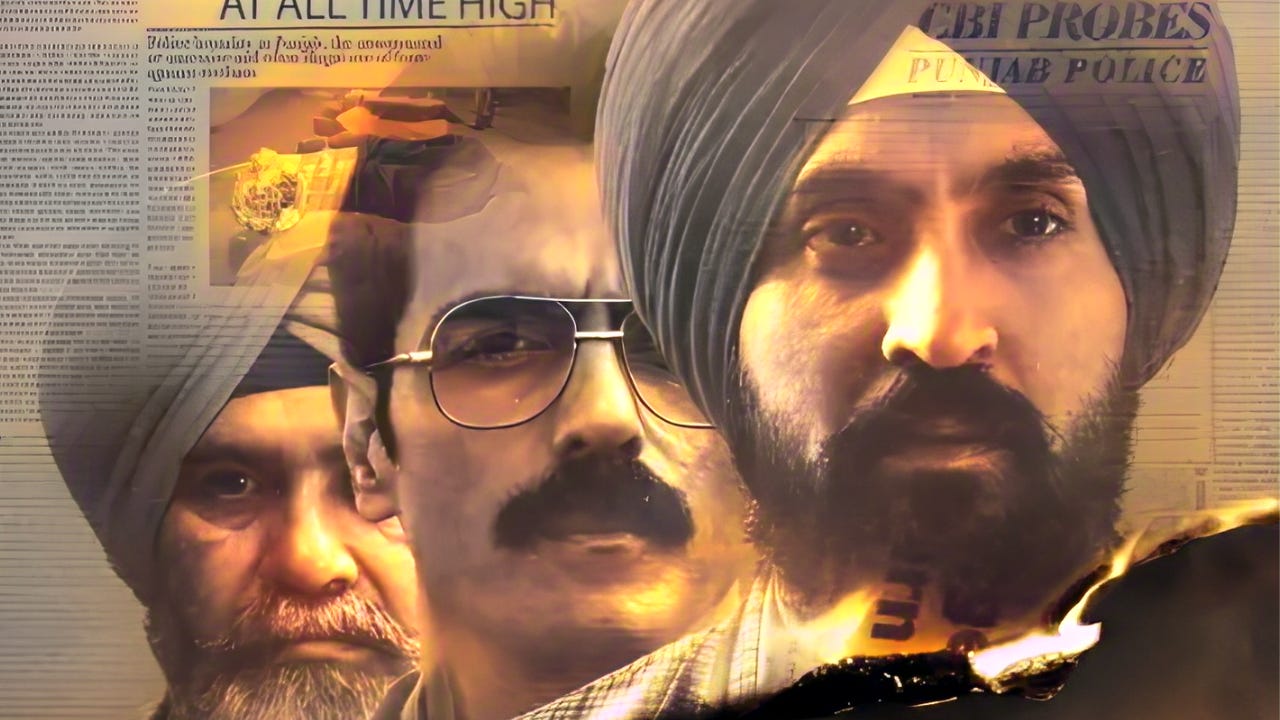
When a film shines a light on the darkest chapters of a nation’s history, governments usually react in one of two ways: they either suppress it out of fear it might disturb public calm or their political interests, or they keep their calm and trust their citizens to confront reality.
The swift digital takedown of Satluj—released on ZEE5 and removed within 48 hours—shows a clear preference for containment. Yet global experience shows mature democracies consistently choose open dialogue over censorship. By treating audiences as adults, they have found that facing uncomfortable truths builds greater public trust than sudden bans ever could.
Satluj, directed by Honey Trehan, portrays the life of human rights activist Jaswant Singh Khalra, who documented alleged police excesses and disappearances in 1990s Punjab before his own abduction and murder in 1995—events backed by court records and investigations. The film faced over three years of CBFC hurdles, including demands for more than 100 cuts. Here is how five other nations responded to similarly critical films:
1. South Korea: A Taxi Driver (2017)
This film depicts the Gwangju Uprising of 1980, when the military dictatorship imposed a strict media blackout and killed hundreds of civilians and student protesters.
Instead of blocking A Taxi Driver out of fear that it would damage the military’s reputation, the government embraced the film. President Moon Jae-in publicly attended a high-profile screening alongside its creators.
The film became a massive box-office hit, represented South Korea at the Oscars, and helped spark a fresh, independent official investigation into the historic massacre and its subsequent cover-up.
2. United Kingdom: Bloody Sunday (2002)
The film reconstructs the 1972 killing of 14 unarmed civil rights marchers by British paratroopers in Northern Ireland—a deeply sensitive and volatile issue tied to decades of conflict in the region.
Despite Bloody Sunday’s sharp and unflinching criticism of the army’s actions, the government did not interfere with its release. It was broadcast on mainstream national television (ITV) and shown in theaters nationwide.
The film won major international awards, including the Golden Bear at the Berlin Film Festival. Crucially, its release came while a major public inquiry into the killings was underway—an inquiry that ultimately held the British Army responsible—without the film causing any significant public unrest.
3. United States: The Report (2019)
This political drama exposes the Central Intelligence Agency’s (CIA) systematic use of brutal and illegal torture techniques after 9/11, alongside government efforts to bury the findings.
The Report depicts serious misconduct at the highest levels of the nation’s intelligence apparatus while retaining the real names of several high-profile officials. Despite its sensitive national security themes, the government made no attempt to censor, edit, or delay the film’s release.
Amazon Studios released the film in theaters and later streamed it globally without political interference, contributing to a wider public debate over the ethics of American counterterrorism tactics.
4. Argentina: Argentina, 1985 (2022)
The film recreates the historic trial of the top leaders of the military dictatorship responsible for the “Dirty War”—a dark period involving state-sponsored torture, illegal detentions, and an estimated 30,000 forced disappearances of dissidents.
The legacy of the dictatorship remains a highly sensitive and polarized political issue in modern Argentina. Despite the potential for political friction, the government did not restrict Argentina, 1985. Instead, it allowed the film to be produced and distributed internationally without interference.
The film became a major cultural phenomenon, drawing over a million viewers to theaters in its first month alone. By refusing to hide past horrors out of fear of controversy, it tried to educate a younger generation born into peace about core democratic values.
5. Israel: Waltz with Bashir (2008)
This animated documentary confronts an Israeli soldier’s repressed memories of the 1982 Lebanon invasion and the harrowing Sabra and Shatila massacres.
Waltz with Bashir exposed severe moral failures and negligence within the nation’s military leadership during an ongoing foreign conflict. Yet, the government did not restrict it—and the project was actually partially financed by the Israeli Film Fund, a state-backed body under the Ministry of Culture.
It swept the Israeli Academy Awards, earned an Oscar nomination, and opened up a crucial, healthy space for veterans and the public to discuss collective trauma and responsibility.
Democracies do have valid reasons to restrict films, which includes stopping deliberate distortion of facts. In Satluj’s case, the government cited concerns over law and order and potential misuse by anti-India forces. But global human rights standards hold that such restrictions on free expression must involve a direct, imminent, and provable threat—not just generalised anxiety about public discomfort or political sensitivity.
The core of Satluj—Jaswant Singh Khalra’s documented pursuit of justice—is deeply rooted in Indian judicial records. If the film distorts facts, it can surely be challenged on that count. Suppressing it entirely in the name of security (which in any case doesn’t work fully in this digital age) risks distancing India from the very democratic standards it upholds. True confidence in a democracy lies in allowing citizens to confront history openly, not shielding them from it.
Subscribe to get updates, bookmark, or comment.